
What is the Difference Between Input VAT and Output VAT, and How Does YAS ACCOUNT Calculate It Automatically?
Value Added Tax (VAT) applies at each stage of production or service delivery. To manage VAT accurately, it’s essential to understand the difference between Input VAT and Output VAT.
What is Output VAT?
Output VAT is the tax collected from customers when selling taxable goods or services.
Example: Selling a product for AED 1,000 → Output VAT 5% = AED 50 added to the invoice. This amount is later remitted to the Federal Tax Authority (FTA).
What is Input VAT?
Input VAT is the tax a business pays when purchasing goods or services for operations.
Example: Buying materials for AED 500 + 5% VAT (AED 25) → this VAT can be reclaimed later.
How Is VAT Payable Calculated?
Payable VAT = Output VAT – Input VAT
-
-
-
If positive → pay the difference to the FTA.
-
If negative → claim a refund or carry forward to the next period.
-
-
Example :
| Description | Amount (AED) | VAT (5%) | Total |
|---|---|---|---|
| Sales (Output) | 10,000 | 500 | 10,500 |
| Purchases (Input) | 4,000 | 200 | 4,200 |
| VAT Payable | 300 |
How YAS ACCOUNT Handles VAT Automatically
-
-
Automatic calculation of Input and Output VAT for every sale and purchase.
-
Applies the correct VAT rate automatically (5% or 0%).
-
Generates FTA-compliant tax invoices.
-
Detailed Input & Output VAT reports with FTA XML export.
-
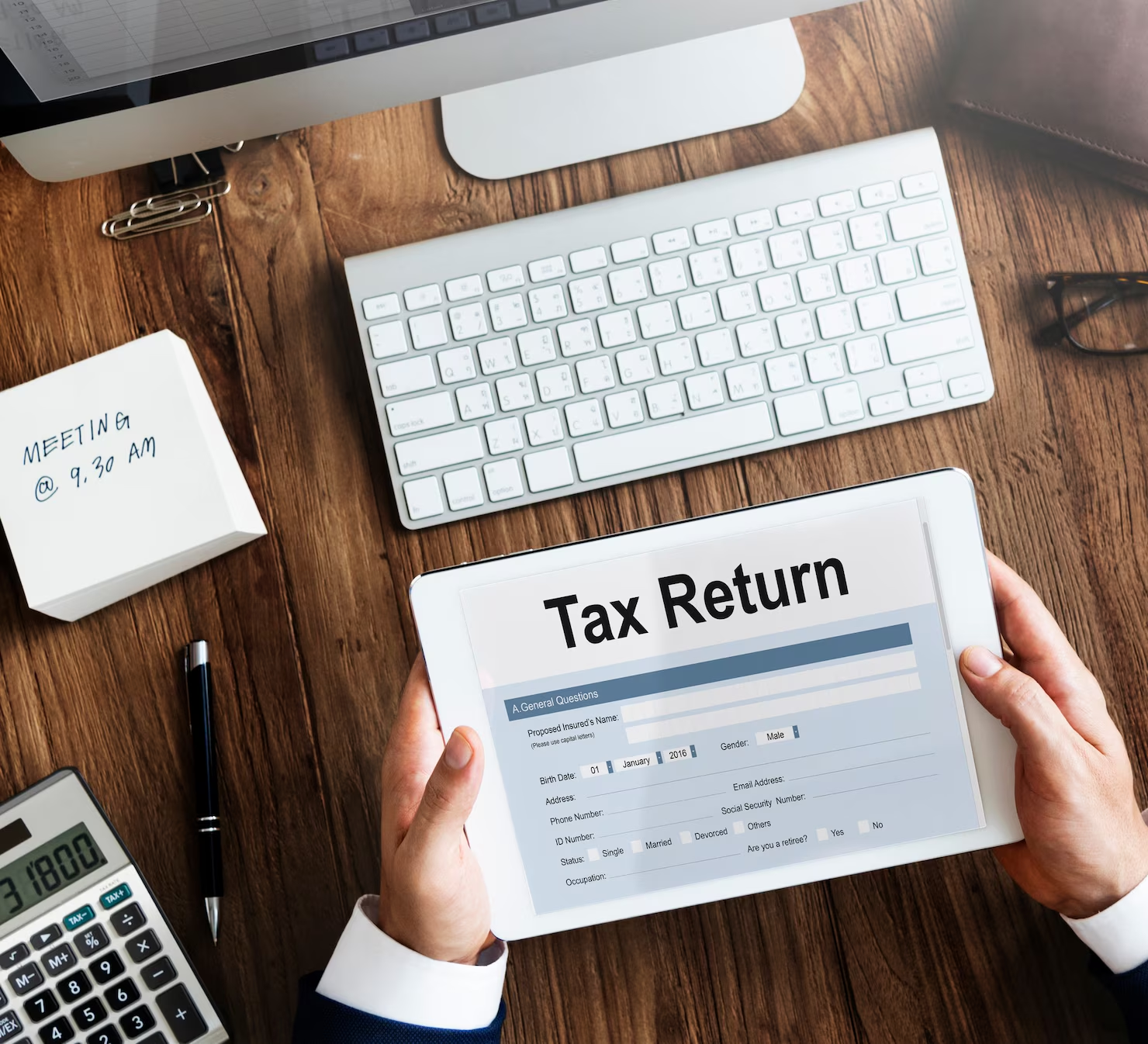
Ready-to-submit VAT returns within minutes.
-
Real-time alerts for mismatched or missing entries.
-
Summary Table
| Type | Output VAT | Input VAT |
|---|---|---|
| Source | Sales | Purchases |
| Paid by | Customer | Business |
| Received by | Business (then FTA) | Supplier (then reclaimable) |
| YAS ACCOUNT Function | Auto-calculated & charged | Auto-deducted & reported |
YAS ACCOUNT makes VAT management accurate and effortless — no human errors or delays in filing.